

Is a website ignoring your requests to remove NCSEI? It may be time to contact the web host.
A web hosting provider stores and serves a website’s files, and is separate from the website owner. I like to use CentralOps.net to get information about who is hosting a website. Sometimes a website host will be more helpful than the website owner.
Look up a problematic website on CentralOps and scroll down to “Network Whois record” title. This will name the hosting provider or proxy service that is serving a website to its visitors.
CentralOps results may reveal possible points of contact: a tech administrator, abuse/NOC contacts, or Cloudflare.
1. Tech Contact Email

Right before “Network Whois record”, some web hosts will name a “tech email” that is a good option to contact for removal requests. This value could be an email or a link to a contact portal.
2. Abuse/NOC contact:

Sometimes the Network Whois record will reveal who the web host provider is immediately, and you can email the abuse and/or network operations center (NOC) contact**.**
3. Cloudflare
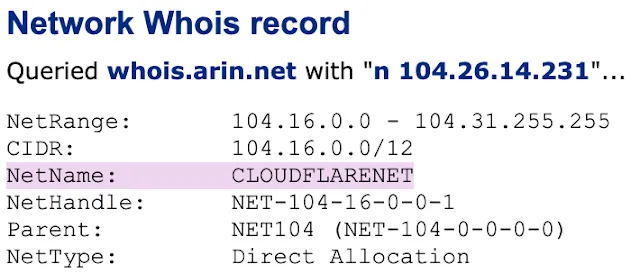
If the Network Whois names Cloudflare, this means they are using Cloudflare as a proxy to hide the true host. It’s best to submit a report through Cloudflare’s NCSEI abuse portal. You will get a fast reply from Cloudflare with name and contact email of the true website host. For additional information, check out our article on reporting NCSEI abuse to Cloudflare.
Reporting Images and Video

Right-clicking an image allows one to get its URL. This image URL can be used to query CentralOps for web hosting information.
Keep in mind that images and videos are sometimes hosted on different servers than the main content of a website. Right-click the image or video to find its direct URL and run a separate CentralOps search on that specific domain.
Some hosts are more responsive than others, so results may vary! Sometimes sending multiple emails are necessary before a web host takes action. Contacting a hosting provider has worked for many of my cases.
However, in the case you encounter a bulletproof hosting provider – a web host that intentionally ignores removal requests – you may consider contacting the web host’s upstream service provider.
This post was last updated on December 22, 2025.